Showing posts with label Will Self. Show all posts

Sunday, 24 August 2014

P-Funk 1: London Perambulations


THE P-WORD:


Like many other folk these days, I drop the word 'psychogeography' with careless abandon.  Indeed this blog is littered with it, as are many others, along with numerous books, articles, films, lectures, seminars, websites, tweets, - and who knows what else?  It's a term (perhaps like 'Hauntology') which describes a recognisable sensibility within certain cultural expressions, but which has inevitably become devalued through its over-application to a increasingly diverse range of artefacts and activities.
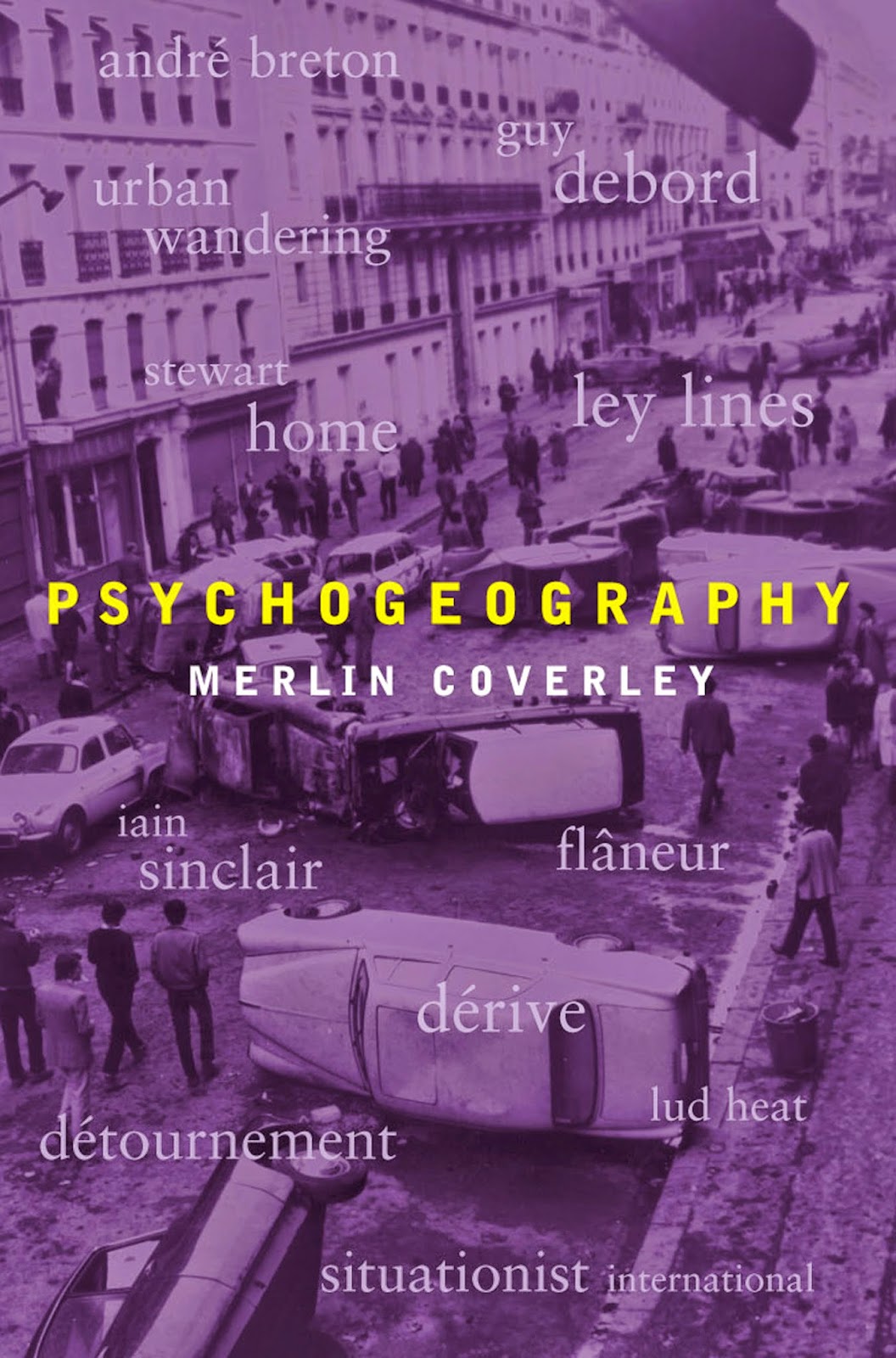


Of course, it's not unusual for such invented, theoretical labels to become adapted to different uses and often disputed over, in the process losing any currency they may have once had through dwindling specificity or changes in intellectual fashion.  I don't want to embark on an extended discussion of the word's multiple applications and provenances here, but would once again refer anyone interested in the Psychogeographic tradition to Merlin Coverley's useful little overview, 'Psychogeography' [1.].  In his introduction, Coverley himself states, 

'Psychogeography'. A term that has become strangely familiar - strange because, despite the frequency of its usage, no one seems quite able to pin down exactly what it means or where it comes from.  The names are all familiar too:  Guy Debord and the Situationists, Iain Sinclair and Peter Ackroyd, Stewart Home and Will Self.  Are they all involved?  And, if so, in what?  Are we talking about a predominantly literary movement or a political strategy, a series of new age ideas or a set of avant-garde practices?  The answer, of course, is that psychogeography is full of all these things, resisting definition through a shifting series of interwoven themes and constantly being reshaped by its practitioners." [2.]


Self-Styled Comic Book Magus, Alan Moore


In the light of this, I was interested to see that Iain Sinclair, a writer who many may see as sitting at the head of the table of literary psychogeography,  now appears to reject the term altogether. This was made plain to me whilst reading the Quietus article, (already referred to in one of my subway-themed posts), in which comic book writer, Alan Moore, discussed his own psychogeographical interests in relation to Sinclair.

"Perhaps understandably, Sinclair has more recently attempted to distance himself from the term psychogeography. In the film, 'The London Perambulator', Sinclair urges that psychogeography had relevance when the Situationist used it as an aggressive way of dealing with the city, and then again when Stewart Home later resurrected it and brought comedic value to it, but eventually became a 'nasty brand name' used to describe almost anything to do with cities or walking. He has instead signed up to Nick Papadimitriou's notion of 'Deep Topography' which brings the tradition back to that of the British naturalist, the wanderer of edges who is not so preoccupied with the concept of his practice." [3.]


Iain Sinclair


To be honest, I'm happy to leave the semantic debate hanging.  Suffice it to say, for my money, 'Deep Topography' is a perfectly pleasing term - if no more or less useful than the term Sinclair is keen to replace.  Instead, the Quietus article led to me consider two other questions.  Firstly, who exactly is Nick Papadimitriou?  Secondly, why did it take me so long to get round to watching 'The London Perambulator'?


PERAMBULATOR:


Nick Papadimitriou.  Still From John Rogers (Dir.), 'The London Perambulator',  2009


'The London Perambulator' is a documentary film, made in 2009 and directed by John Rogers.  It takes as its subject the activities of outsider/Deep Topographer, Nick Papadimitriou, a man who, (even more than any of the other names dropped here), could be labelled a genuine and rather marvellous eccentric.  Certainly, his whole life now seems to be subsumed into an endless cycle of wanderings and detailed explorations of those parts of Middlesex that most people would automatically overlook.  His chosen patch is archetypal Edgeland territory, with all that that implies.  The film includes significant contributions from Iain Sinclair, Will Self, (for both of whom he has worked as a researcher in the past), and, slightly surprisingly, comedian, Russell Brand.  


Comedian (And Self-Styled Revolutionary/Sex Machine/Media Messiah), Russell Brand


Papadimitriou himself clearly had a troubled early life, serving time for burning down his own school as a teenager, and, bizarrely, becoming the subject of a poem by serial killer Dennis Neilsen whilst incarcerated in Wormwood Scrubs.  He has also has a past history of drug abuse, - something he shares with both Self and Brand [4.].  Indeed, I can't help wondering if, for some, all this restless walking and obsessive documentation of seemingly insignificant landscape details might not be a search for deeper engagement with one's existence in a puzzling, fascinating world without narcotics.  Could, all this ceaseless motion and repeated striking out, be a search for a variety of transcendence whilst keeping one step ahead of their vices?  In one of the film's notable scene's, Papadimitiou and Self discuss the diminishing returns of heavy drug use, something that is antithetical to the kind of focus they now seek.  Elsewhere, Sinclair discusses walking as the core psychogeographic activity for its ability to raise consciousness.


Nick Papadimitriou: Reading Between The Lines.  Still From: John Rogers (Dir.),
 'The London Perambulator',  2009


Perhaps Sinclair and Self's disillusionment with the label often attached to them, stems in part from comparing the depth of their own activities and relationship to the landscape with that of  Papadimitriou's.  If they ultimately re-examine their own experiences through the detached filter of literature, there is a sense in which Nick is Deep Topography [5.].  It's one thing to sense physical underground streams and discuss how the engineering of such natural flows into the fabric of the city lends it a multi-layered aspect, (as the film opens), or to exhibit an obsessive interest with the Mogden Water Purification Plant [6.].  However, it is something altogether different to claim, "my ambition is to hold my region in my mind", as he does later, and to imagine his own identity becoming totally subsumed into the very fabric of Middlesex. For all his apparent superficialities, it may be that Russell Brand's slightly daffy air of wonder at encountering someone so singularly at one with his chosen subject, comes closest to pinning down Nick's essence.  Maybe this isn't really a surprise after all.  Brand is known for his quasi-spritual dabblings, and there's definitely something of the ecstatic mystic about some of Papadimitiou's utterances.  He would appear to come from Blakeian tradition more than a Debordian one.


If there is a tragedy at the heart of Nick Papadimitriou's life, it is revealed towards the end of the film where he questions whether it's all been a dispiriting waste of time to have been hanging about in the Edgelands when he could have been working or raising a family.  Ultimately, though, is this not the deal that all artists, (or full-time thinkers), must make to a greater or lesser degree? The other point worth making is that, for all his latent train-spottery  he has seemingly compiled an archive of material on his chosen patch, far deeper and wide-ranging than any other individual or institution could hope to.  If Papadimitriou's real legacy is to demonstrate a more intense and rewarding relationship with our surroundings than most  will ever experience, - well, someone has to do it.  To that end, I'd encourage anyone who's ever wondered what all this wittering about psychogeography (or indeed Deep Topography) is all about, to watch 'The London Perambulator', or its shorter companion piece, 'Inside Deep Library' [7.].


[1.], [2.]:  Merlin Coverley, 'Psychogeography', London, Pocket Essentials, 2006 

[3.]:  John Rogers (Dir.), 'The London Perambulator', London, Vanity Projects, 2009.

[4.]:  I have no knowledge of Sinclair's previous experience in this respect.  He's associated with plenty of counter-cultural figures over the years though, including notorious 'importer' Howard Marks, so I doubt he's a complete naif.

[5.]:  I think I'm talking about degrees of intensity and emotional commitment here.  Papadimitriou is, after all a published author too:
Nick Papadimitriou, 'Scarp, In Search Of London's Outer Limits', London, Sceptre, 2012.

[6.]:  Papademitriou's linkage of The Sewage Works' processing of externalised waste, with the impulse towards psychotherapy, is exactly the kind of thinking many of us lapsing into at any opportunity, (although not quite so passionately expressed, perhaps).  And, this focussing on what Self splendidly calls forgotten "Oxbow Lakes Of Urbanity", is little different from hanging around in Leicester's subway system, after all.

[7.]:  John Rogers (Dir.), 'Inside Deep Library', London, 2007


Thursday, 28 November 2013

Will Self On 'The Society Of The Spectacle'


In various posts, and different contexts, I’ve variously referred to Situationism, GuyDebord, Psychogeography, Patrick Keiller and Will Self in this blog.  I’ve just caught up with an interesting item on the BBC Radio Programme ‘Night Waves’ in which Self, (himself), draws together all those strands, in interview, following his written introduction to a new edition of Debord’s ‘The Society Of The Spectacle’ [1.].


Guy Debord

Will Self


As usual, Self uses his vast, splendiferous vocabulary with genuine relish but still manages to supply a useful, compact introduction/overview of the items under discussion.  It’s available on the BBC iPlayer here, [2.], and I’d recommend anyone with any interest in those subjects to give it a quick listen, (about 35 minutes into the 45 minute broadcast).


Patrick Keiller (Photo: Fernando Shehani / Guardian)


In passing, it’s also a perfect illustration of why the BBC is still the best broadcaster in the World, (for all its institutional defects), and one of the few remaining things of any real value worth living in Britain for.  What other contemporary media outlet would take the trouble to explain exactly why it is itself part of the very ‘Spectacle’ being critiqued?  We’ll all be irreversibly impoverished once the barbarians dismantle The Beeb, or sell it off, (but that’s a different rant).


[1.]:  Guy Debord (With Introduction By Will Self), ‘The Society Of The Spectacle’, London, Notting Hill Editions, 2013


[2.]:  ‘Night Waves’, BBC Radio 3.  Broadcast: 25 November 2013


Saturday, 10 November 2012

An Evening With Will Self


I went to Leicester University the other night to hear author Will Self discussing his new book, ‘Umbrella’ [1.], as part of their ‘Literary Leicester’ festival.  Self is a familiar, often controversial figure within the British cultural scene and enjoys an international reputation for both his fiction and journalism.  He’s adept at playing the media at its own game and is regularly observed performing his cynical, ex-junkie of letters routine across multiple platforms.  The fact he also appears possessed of a brain the size of a planet and habitually delivers material that is as perceptive and well crafted as it is challenging, makes this more amusing than irritating.  He appears equally comfortable appearing on populist T.V. or demonstrating intellectual rigour and a formidable mastery of the language to an academic or broadsheet audience.  He’s by turns withering, engaging and sardonically amusing.


Will's Shelves, (Photo: The Guardian/Karen Robinson).

Plenty of attention was paid recently to the somewhat surprising nomination of ‘Umbrella’ for the Man Booker Prize for fiction, - eventually losing to second-time winner Hilary Mantel’s Tudor Novel, ‘Bring Up The Bodies’. [2.]  That Self’s formally experimental and self-consciously Modernist novel should be judged alongside supposedly more middlebrow offerings, or be included in the fatuous beauty pageant at all, has been described as “a category error” by his own wife, journalist Deborah Orr. [3.]


Certainly, the man himself was quick with a swipe at historical fiction of, “say, the Tudor period”, before making genuinely interesting points about how Modernist literary tropes like magic realism, stream of consciousness and multiple voices might actually be closer to real experience than the more conventional modes; (for instance, third person narrative), typical of less elevated writing.  It was intriguing to hear an author with such a palpable love of words explain his belief that humans don’t generally think verbally, and certainly not in the manner of much contemporary fiction.

On reflection, his distain for Mantel’s work sounds slightly misplaced.  I’ll accept it’s not mere sour grapes as I’ve no doubt Self is sincere in his understandable aversion to the infantilisation of a culture expressed through prizes and award ceremonies.  One might inquire why then, he chose to collude with the aforementioned category error.  It’s possible the whole thing was a bit of a lark to highlight the contrast between comfort literature and the hard stuff.  Certainly, his amusing approach to the official photo might  affirm that, (I do wonder if the chosen form of his name, Will Self, itself might actually signify that his entire public persona is all a huge, knowing gag).


Will Self's Single Handed Elevation Of The Novel Form,
(Photo: AP/Lefteris Piterakis).

Where I find Self to be slightly unfair is in ignoring that Mantel herself has, in her Tudor novels [4.], used a somewhat more experimental approach to form than is common in much historical fiction. If she has extended her writing beyond the normal constrains of genre, this surely represents some kind of intellectual advance.  Ironically, Self’s reading, complete with character voices actually reminded me slightly of Mantel’s own inhabitation of her own protagonist’s internal monologue.  Whilst clearly not operating at Self’s own Joycean altitudes, her books caused at least one reader of my acquaintance to describe them as a really interesting if rather demanding read.  Ultimately, perhaps Self chooses to forget that who’s cleverest or which work is the most worthy, are all relative.


A Tall, Thin Author With High Standards, (Photo:
Telegraph/Andrew Crowley).

I can agree that the Tudor soap opera is an account that has been over-rehearsed and that to be endlessly reacquainted with the same events can be dispiriting.  But the lurid events of that period undeniably mark a fulcrum in British history with a legacy that is still felt today and it seems arrogant to assume that, because I know something, so must everyone else.  Also, where Mantel does find new ground is in relating events from the viewpoint of Thomas Cromwell, - a man whose own story is often overlooked.  We must make a clear distinction between the study of History and historical fiction as entertainment but, as I’ve previously discussed, the two strands may inform each other perfectly successfully.  My own experience of HF as a gateway drug to more serious study convinces me of that.


Keeping Tabs On Will Self In Flaneur Mode, (Photo: Casey Kelbaugh).

Self was keen to validate his use of stream of consciousness in his current work by claiming that his perception of the world is largely in the moment and that references in the past tense must, in most cases be little more than reconstructed false memory.  At the same time, I noticed the word ‘Psychogeographic’ was used with some abandon during the discussion of his recent work.  My understanding of the term is that the interaction of present experience with multiple pasts, (including subjective or reconstructed memory), is a potentially important element within the approach.  Self’s own supposedly Psychogeographic writing, including ‘Walking To Hollywood’ [5.] and 'Psychogeography' [6]; has actually been dismissed by Iain Sinclair as not actually in the true spirit of that tradition at all.  It does suggest that, as Self himself demonstrated, one writer’s real deal may be another’s weak gear.


This post is admittedly compromised by the fact I have yet to read ‘Umbrella’ or indeed ‘Walking To Hollywood’.  I do know that I want both Will Self and Hilary Mantel, (and Iain Sinclair), on my shelves and suspect that context is all and horses really are for courses.

(I enjoyed the hour we spent in Mr Self's company and, on the off-chance he might actually read this one day, - must apologise for my own woolly thinking, mangling of the language and probable misuse of punctuation.)


[1.]:  Will Self, 'Umbrella', London, Bloomsbury, 2012

[2.]:  Hilary Mantel, 'Bring Up The Bodies', London, Fourth Estate, 2012

[3.]:  Deborah Orr, 'For A Moment I Really Thought My Husband Had Won The Booker. But No!', The Guardian, Friday, 19 October 2012

[4.]:  See Also:  Hilary Mantel, 'Wolf Hall', London, Fourth Estate, 2012

[5.]:  Will Self, 'Walking To Hollywood', London, Bloomsbury, 2010

[6.]:  Will Self & Ralph Steadman, 'Psychogeography', London, Bloomsbury, 2007