Showing posts with label Personal History. Show all posts

Saturday, 7 September 2024

Pre-Mobile [The Booths]


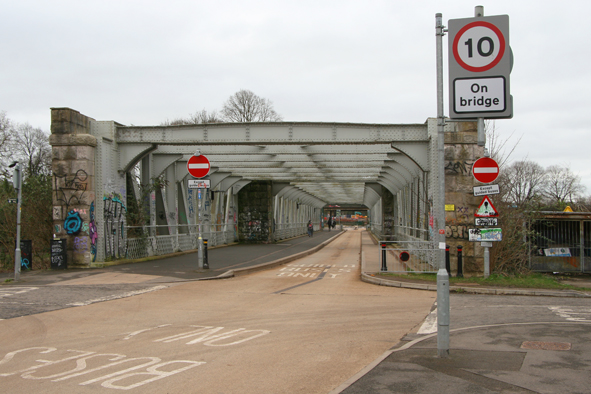
All Images: West Leicester & Clifton, Bristol, August 2024


I have always experienced a certain trepidation about using telephones. Like other kinds of social awkwardness, this was a distinct impediment in my youth, but something I have learned to manage far more effectively in adulthood. Nevertheless, even now, I will still sometimes avoid a phone conversation if there is a viable alternative, or unless a practical imperative pleasurable or pleasurable social interaction are indicated. 


I doubt I am the only one to have experienced such alienation. Our culture is full of references to troubling or confusing telephonic interactions (although they are certainly reported far less often anecdotally). A pretty extreme cinematic example is Joel Schumacher’s 2002 psychological thriller, ‘Phonebooth’ [1.], in which Colin Farrell’s lead character answers a random, unexpected call to a public phone - only to become pinned-down in the kiosk by an unseen sniper. For most of the film, it becomes the highly constricted arena in which he must make potentially life-changing/ending decisions and face-up to his own moral shortcomings. 


Idea for a possible survey:


Which form of phone-call would you least welcome - 


  1. One in which a stranger imparts unexpected/disturbing information?
  2. One in which no one speaks (possibly enhanced by static, breathing, etc.)?
  3. One in in which a public phone begins to ring inexplicably and you are immediately posed the dilemma - to pick-up or ignore?


N.B: Any of these examples might constitute pivotal points in a narrative, or portals to alternative realities (looked-for or otherwise).


Some of my earliest memories involve entering a traditional, red GPO phone box with my mother, at the age of three or four. For somewhat anomalous reasons, the city we lived in also had cream-painted, privately-run boxes, but we were generally GPO customers. It’s possible there were calls to various people, but the ones I remember are those to my Grandmother, who lived on the opposite bank of the adjacent estuary (private line into our own home didn’t come until we ourselves relocated to the southern shore, a couple of years later). There are relatively few intervening miles involved, but in memory, the special journey to the kiosk, and the electronic distancing effect of the apparatus - with its associated infrastructure of cables and exchanges, gave the impression of contacting a foreign country. A trip to visit in person (pre-bridge) involved two train rides and a short paddle-steamer voyage, which only magnified that effect.


The Proustian potential of smell is well documented, and those old multi-windowed cast-iron booths had a particular aroma which remains vivid in the memory. Reason suggests it was essentially a blend of painted cast iron, residual cigarette smoke, and a hint of urine, perhaps - but even now I would simply identify it as that old telephone box smell. Almost as strong are the lasting impressions of filmed and scratched glass - distorting the street outside as I pressed my nose to each individual pane, or the heavily enamelled texture of the iron glazing bars beneath my fingers. Roughly level with the top of my head was a brushed-steel shelf (amazingly, now) - complete with an extensively-thumbed phonebook. My mother would lift me up there, with a coin or two pressed into my hand. Their insertion into the specified slot was a critically-timed procedure - performed exactly as she heard my Grandmother pick-up at the other end, but for me the real satisfaction lay in the sudden release and satisfying metallic clink as each coin dropped into the coin chamber. I might then leaf through the directory pages (futilely searching for some break in the dense and interminable list) as I waited for the handset to be handed over and my Grandmother’s strangely altered voice greeting me from the other side of the world.


Some years later, having left home, I moved between a succession of shared student houses. In very few cases were we prepared to split a phone bill (even if our irregular  comings and goings would have made it feasible). Once more, I found myself in public call boxes whenever it was necessary to make a call. If possible, I would often choose pen and paper instead. For a period, I became a prolific, and typically prolix letter-writer. 


On one occasion I visited the call box at the other end of our street, to make a fairly lengthy call. It was the end of the day, I was weary, and only when I got home did I realise I had foolishly left the kit bag I’d been carrying on the shelf where I once sat as a child (the accompanying directories being long-lost by then). Having only recently relocated to that address, I had stored all my personal documents in the same bag for safekeeping (passport, birth certificate, medical documents, etc., etc.) - but neglected to remove them before going out for the day. Its perceived value instantly multiplied way beyond the meagre cost of simply replacing a cheap canvas bag. It took no more than 5 minutes to run back to the phone booth, but in the interim the bag had been filched. Back then, restoring key official documents could involve an extended bureaucratic ordeal (involving a series of further phone-calls and letters, ironically). For several weeks, it felt like the monster had effectively swallowed my life.


Of course, technological ‘progress’ has long-since rendered the boxes all-but obsolete. Whilst I may be an habitual late-adopter, I’m not a total Luddite, and so I too carry a mobile device - just like (nearly) everyone else. If I’m honest, the range of typed/deferred  alternatives to spoken calls, and obvious flexibility it offers, actually suit me fine. However, any vestigial anxiety about phone calls is now replaced with the periodic stress of negotiating a new deal, and  the life-sapping chores of managing emails, social-media posts, updates etc. Communication over distance never really gets simpler, it seems. It may have become less of a deliberate or pre-planned operation, but the potential filters between us still morph and multiply, nonetheless.


The old cast-iron kiosks slowly retreated into that quaint dimension of British ‘heritage’ that  also encompasses Morris Minors (my family also drove those), welcoming pubs, and properly-funded public services. Most were gradually replaced by a more minimalist, glass-sided variant, adorned by an ever-changing succession of privatised company logos. Somehow, those always felt pretty shonky, despite their somewhat belated nod to functional Modernism. Sleek aesthetics and an ever-contracting societal regard for shared facilities are rarely a great fit, and so it became increasingly rare to find one in a pristine, un-vandalised or otherwise unadorned state. Their bland, flat sides proved impossible for corporate interests to overlook as potential advertising space, and fly-posters-by-night and graffiti enthusiasts clearly felt the same way.


Luckily, all that patina, entropy, entangled messaging, and creeping neglect remain visual meat and drink for my own lens (for the time being, at least). Indeed, even complete absence itself can often supply viable subject-matter, I find. Certainly, the pit-falls of nostalgia are far more usefully swapped-out for an appreciation of the inevitable processes of urban/social change. Either way, the ever-accelerating decline of/demand for the booths, and apparent reluctance of BT to maintain those that do linger, suggest they will probably become just another ghost of the Everyday before long - perhaps revealed in the form of a occasional wrecked carcass, or vacant concrete pad.


[1.]:  Joel Shumacher (Dir.), 'Phone Booth', Fox 2000 Pictures & Zucker/Netter Productions, 2002


Monday, 5 August 2024

Be In Bristol


Whiteladies Road, Bristol, August 2024


I’ve just returned from another of my regular short trips to Bristol. Over the last couple of years these have been largely dedicated to collecting material for what has slowly coalesced into my ever-expanding ‘The Basin’ project. That ‘ever-expanding’ quality explains why progress has been slower than originally envisaged (as is so often the case when I dig myself into something). Fortunately, ‘steady’ is also an applicable adjective, and the project continues to feel both relevant and rewarding.


However, it’s definitely time to stop ceaselessly collecting visual raw material, and imperative that the project should now solidify into a more tangible statement. A number of posts on here have featured first drafts of the written ‘chapters’ around which the project is to be structured, and pleasingly, I’m now starting to see some distant glimmers of light at the end of that particular tunnel. Consequently, this most recent trip featured relatively little photographic action around the Cumberland Basin site itself, and rather more general daytime drifting around a wider sweep of Bristol territory, with a few writing hours put in on the laptop once back in the hotel room.


As is inevitably the case, (indeed - the whole point really) drifting leads to observation, reflection and unpredicted leaps of imagination. Here then, are a series of random musings, separate from ‘The Basin’, and connected only by the serendipitously found text appearing in these images:


  • Reflection: To simply ‘Be in Bristol’  involves a three-hour motorway drive each way, plus the price of a mid-range hotel room and sundry refreshments. The cost implications of making the state more permanent are intimidating. As one walks away from the estate agent’s window, the undeniable attractions of these streets exerts itself all over again. The old cost-value/quantity-quality dilemmas crash in. 
  • Irony: When I was here, in a previous life, education was supported and my income dependant on hand-outs. Housing support covered the rent on a cheap room, at a shabby address, in a charming quarter. It was another century.
  • Memory: The landlord carried a replacement refrigerator on his back, up three flights of stairs.
  • Cartographical Reflection: Slight diversions reveal the fractal details of the street plan. Hidden lanes, tiny cottages, the obscure climb up to the World’s End.
  • Irony: Such newly-uncovered places lie within the shadow of previous homes. It has required intervening decades and a conscious recherché to unfold them from the map.
  • Reflection: The economy of this place appears to function through refreshments, relaxation, and the deferment of mortality. Every neighbourhood offers a choice of coffee, tapas, running gear, and beauty fixes. Nail maintenance and the Pilates Zone are readily accessible. Those not drawn in there appear to be renovating heritage properties at a leisurely pace. The suspicion is that far more lucrative flows must operate through subterranean channels.
  • Observation: A middle-aged woman on the table adjacent. Exhaustive/ing account (in clipped tones) of her daughter’s recruitment to a rapidly-expanding digital start-up (the interview process, starting salary, share options, possible relocation to New York). In production of what? She’s clearly what they were looking for but the drive to an out-of-town HQ may prove tedious.
  • Observation: A man in his dynamic years, with suit jacket over one arm. The other extends a phone to his ear. Street food, cocktails and coffee are imbibed around him in early evening sunlight. Indifference to the detritus building at his feet. Negotiations last longer than the ordering and consumption of several meals.


  • Physical Accomodation: At a certain age, the knees of the flaneur require endless perambulation to give way to the cafe table with street view. Close the paperback and laptop for the second coffee. Simply Allow the city to come to you through an open window.
  • Observation: The two nearest tables are dedicated to accounts of recent trips and the planning of the next (the perfect Air B&B, the secret restaurant, etc.) On the third, a man in late middle-age scrolls through his screen and quietly dictates the salient points into his phone. The subject is inaudible despite the proximity. His murmur layers into the ambience.
  • Observation: At 11.00 am, the vast majority of tables (at all venues) are occupied by ranks of the active elderly (see above). Loose sleeves, khaki shorts and sun hats predominate. The proximity of the first cataract operation make sunglasses obligatory. They settle-in and business booms. Early-release funds and property portfolios have been generous.
  • Danger! Irregular Terrain: In this city one always looks up or down. Perspectives become contingent upon elevation. Cliffs and abutments of pastel facades stack overhead. Roofs cascade down the hillside below. The intended goal lies beyond the fugitive crest of any given street. Progress comprises a series of stumbles, jars and barely-internalised curses, amongst arbitrary cobbles and irregular steps. Certain slabs appear to function as trapdoors. One might regain lost fitness or equally succumb to injury here.
  • Observation: Pause for expensive beer at an unsteady pavement table. Two legs stand on an irregular iron cellar hatch. Each passing pedestrian footfall creates a seismic event - clattering my glass loudly.
  • Observation: A paint spattered decorator emerges onto the pavement, agreeing by phone to terminate his leisurely pub lunch. He crosses to the most bourgeois hardware shop imaginable (situated opposite between Japanese food and smart coffee). 90 seconds pass. He emerges, clutching a single one and a half-inch glossing brush. The artisans handle themselves somewhat differently in this neighbourhood. 
  • Reflection: Glimpsed between facades, or at the point where an elevated street curves away, certain distant windows suddenly catch the eye. Teetering attics are stacked amongst precarious roof-scapes. How does the city appear from that vantage? Could one be in that room? 


Acknowledgement:

The influence of Georges Perec on this post cannot be overlooked - both as a master observer of the everyday, and a noted conoisseur of urban spaces. Between composing these fragments, I consumed numerous chapters of:

Georges Perec, 'Species of Spaces and Other Pieces' (Ed/Trans. John Sturrock), London, Penguin, 1974/1997.


Monday, 22 May 2023

Bristol Derives 2: Bridgework [trans_scribe]


All Images: Ashton Avenue Bridge, South Bristol, February 2023


[Reconfigured Video Transcription With Additions]:


The bridge to us is a great piece of architecture it has a great history and of course it provides a very easy local route for people to get from the north with two squared rock-faced limestone piers the southern one of which would pivot the swinging span 20 mm thick steel plates over the whole of the surface in an open letter published in January 2020 we then concrete it into the one side to create a cycleway and a walkway and in the centre of the bridge is the new busway it's had a lot of challenges  as no operator will run services without a moveable 202 feet (62 m) Whipple Murphy truss span weighing 1,000 long tons (1,000 t) with total metal work of the entire bridge weighing in at 1,500 long tons (1,500 t) logistics has shown signs of bus rapid transit creep primarily not fully operating on dedicated bus lanes for much of its routes operating in mixed road traffic and being subject to traffic jams in the background today which is great it's a fantastic day to have this bridge open we've been working here for over a year  it's been a very tricky job a difficult job the controlling railway signals were interlocked with the signal boxes on either side of the river making it impossible for signals to be cleared unless the bridge span was locked in the closed position... 


...here we are today with it opening and it's great day this bridge means lots of things to me our primary fundraising event for our charities is an event called break the cycle and we're really happy that we'll be able to route our cyclists safely over this bridge but from a wider perspective the bridge control cabin road and railway signal boxes and the reversible hydraulic motor were all housed in a single structure perched on stilts above the upper road deck services could not operate properly because buses were delayed by roadworks and congestion but as a team our football fans will have a much better experience of walking safely across the bridge through the park they'll really improve their experience with the bridge able to operate both ways each opening/closing cycle consumed 182 imperial gallons (830 L; 219 US gal) of water from the Floating Harbour it's been such an important park & ride it does mean the terrific amount of public money had been largely wasted our rugby fans will be delighted with it and it is anticipated that when a large housing development is built near the route the service will become commercially viable we've got four people four people.


Sunday, 29 May 2022

Significant Yellow Items: #2022.Y014 & #2022.Y015


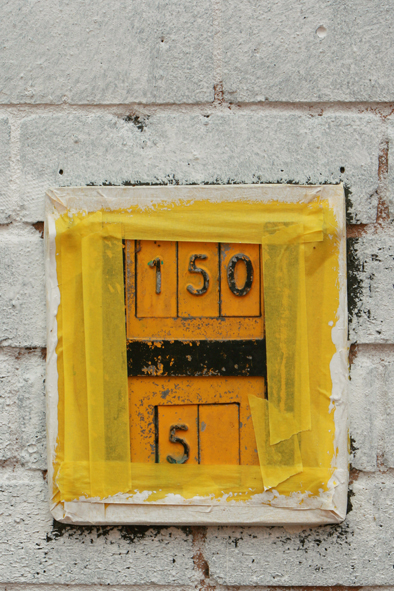
All Yellow Gates Images: West Leicester, February 2022


As a child, I always had a somewhat troubled relationship with numbers. I laboured over maths lessons, and sometimes wonder if I was actually suffering from a mild case of dyscalculia. For a while, around 5 years-old, I even introduced a number called 'Twenteen' (between 19 and 20), when counting. That caused definite problems, as you can imagine. However, I have since come to adore the poetry of the concept - and often speculate on how one might write twenteen numerically (suggestions welcomed).


As an adult, I have contented myself with the fact that, some basic arithmetic and a small  facility with fractions and percentages, the ability to measure, and a moderate grasp on geometry, are about all I've really needed to get by. As I always suspected, simultaneous and quadratic equations appear to have had next to no bearing on my experience. This isn't to downgrade anyone who lives for numbers, but maybe just a recognition that we all speak slightly different languages - and that a quality-orientated world view is just as valid as a quantitative one.


All Hydrant Plaque Images: West Leicester, April 2022


One aspect of my numerical interactions which does remain intriguing, is a prevailing tendency to associate specific numbers with certain chromatic values. For me, 5 has always been situated somewhere within the yellow to yellow-orange spectrum. Apparently, that remains the case.  


Wednesday, 13 May 2020

R.I.P. Little Richard


Little Richard: 1932 - 2020


My musical tastes have expanded in numerous directions, over the years.  But, like anyone of my vintage, the popular music I grew up with was pretty much all contextualised by the legacy of Rock & Roll.  When I first started to take serious notice, in the early to mid 1970s, we were still less than twenty years from that music's first flowering.  There was even a diluted revival of those early stylings occurring in the Pop charts (if only in the fashions worn on 'Top Of The Pops').  However, like any hybrid form, its recognisable components had been around somewhat longer.  The same might be said of one of its founding fathers, 'Little Richard' Penniman - who recently died, at the age of 87.

Little Richard was the most exotic of those pioneering Rock & Rollers (of whom, I guess - only Jerry Lee Lewis now remains).  And, for me, he was always the most striking.  I've plenty of time for the early work of both Chuck Berry and Jerry Lee, and will still cheerfully hang around for Elvis' 'Jailhouse Rock', or 'Hound Dog', should they crop up.  Nevertheless, Richard's stuff seems to contain a greater edge of genuine hysteria - carrying it just a little further than the others, to my mind.  And, ultimately - isn't that what Rock & Roll was always supposed to be about?  As a cultural form, its ludicrous extremes always seemed self-justifying.  Previous musics had  sought to liberate the Id, to loosen the hips and feet, or to prioritise the groin over the head - it's true.  But, it feels like this was about doing all that with an even  glossier, almost cartoonish abandon.  The artifice of it all seemed integral.  Even more than all the other sleazy predators, macho brooders and redneck hell-raisers - Little Richard really seemed to get that.


The difference, of course, stems from his sexuality.  As if expressing the oppressed Black perspective to White audiences in still-segregated America wasn't enough - here was a patently gay man doing it, with nothing more than heavy make-up, an exuberant pompadour, and a swishy suit, for protection.  Richard preferred to label himself 'Pan-sexual', it seems.  Certainly, he must have grown up in the knowledge  that to be both Gay and Black, in the 1940s, was to almost invite a lynching, amongst certain denizens of his native Georgia.  But no one can have been in any real doubt - can they?  Alienated from his family - he'd been fourteen-year-old drag act before Rock & Roll took off, and the lyrics of many of his songs suggested a degree of sexual ambiguity, at best.  Tutti Frutti', even began life as a celebration of anal sex, by all accounts.  When Richard whooped and hollered, and, above all - screamed, it was a voicing of the outrage felt by someone fighting society's prejudice on two fronts.  Like generations of Gay entertainers, before and after, he took the fear and anger, and transmuted them into exuberant performance art.  The lyrics may have been superficially upbeat, but the right to party is often code for the right to be accepted and heard also.


Famously, Little Richard's real moment was over, almost as soon as it began.  Having released all of his most memorable records between 1955 and late 1957 - he retreated into the Pentecostal Christianity to which he was originally raised.  Whether or not his ministry  was a sincere act of penitence for the life he'd lived - only he could say.  Either way, it would certainly suggest an understandable degree of psychological conflict.  When he returned to performance, in 1962 - it was largely as a Gospel singer.  He revisited secular Rock & Roll in 1964 - but who of us can really name a memorably rockin' Little Richard composition after '57 (apart from possibly, 'Bama Lama Bama Loo')?

His star would wax and wane over the following years - and incorporated the almost requisite substance-abuse and routine personal tragedy of the Rock & Roller, before he returned to active evangelism in 1977.  A year or two later, I was busily absorbing the implications of Bob Dylan's back catalogue - just around the time he too announced an alarming right-turn into Born-Again Christianity.  Disappointing though this may have been, it was also intriguing to learn that Dylan's own evangelising was often done on a double bill - with none other than Little Richard.  And the debt that American popular music (particularly Black music) pays to religion, must be acknowledged, of course.  His early songwriting was as knowing as all Hell, but the manner of its delivery was only a step away from what would have been commonplace in the church services of Richard's youth.


Ultimately, what really matters is that 'Long Tall Sally', 'Lucille' , and all those other early classic cuts still sound as fresh and urgent as they did a lifetime ago.  And, as others have pointed out: without Little Richard - would we have ever had James Brown and Jimi Hendrix, or McCartney's vocal stylings and Jagger's camp strut, or Elton John's piano-bound theatrics, or Bowie's androgynous shape-shifting and Prince's actual, and seemingly voracious, pan-sexuality - at least in the form in which we now recognise them?  And, with reference to the above - let's not forget that Bob Dylan's earliest-known, teenage recording, was a ham-fisted tribute to the man himself.

With the passing of Little Richard - it feels like a certain era might also have come to a close.  Certainly, the World will be a drabber place without him.


Monday, 13 April 2020

Out Of The Frying Pan: Remembering William Scott


William Scott, 'Figure And Still Life', Oil on Canvas, 1219 mm x 1530 mm, 1956


We're officially amidst what would normally be the academic Easter break - although that's clearly pretty meaningless, given the current situation.  Many teaching staff have continued to work from home, preparing online teaching materials and attending to the myriad paper/screen/data-based tasks they would normally have to squeeze into the gaps between actual teaching.  Some may be consequently wondering a bit about the exact nature of their vocations/careers.  What exactly, is implied - if so much of the job can be performed without any children in the room?


William Scott, 'Table Still Life', Oil on Canvas, 1433 mm x 1838 mm, 1951


Whatever the ins and outs of all that, I've always been thankful that my own support role as a Technician, mostly involves the everyday practicalities of what happens in actual rooms.  Most of my time is spent engaging with tangible things I can count on shelves, mix up in pots, or clean under a running tap.  Even in Photography lessons, much of my time is spent charging batteries, changing lenses, and setting up lights.  That's all fine and dandy with me - but it does, of course, make it harder to envisage how I might do my job from home.  Given that I am much luckier than many, in still being paid (for now, at least - and something I'm very grateful for), it seemed only reasonable to seek out something significant that might be of use to students and staff, once/if things return to a situation resembling 'normality'.


William Scott, 'The Harbour', Oil on Canvas, 613 mm x 917 mm, 1952


Something that has happened on a fairly regular basis, over the years, is that teachers (and sometimes students) have turned to me, uttering words to the effect of, "Quick! - can you think of an artist/artwork that exemplify (fill in style/approach/theme of choice)?"  An ability to throw up an appropriate name, at least some of the time, has gained me the reputation of being a bit of a walking Art encyclopaedia, although I'm generally at pains to point out that  it's really only because I've been around longer than most other folk in the faculty.  I've been visiting exhibitions and reading books on the subject for most of that time - and for no other reason than I was interested.  If nothing else, I guess I should be grateful my visual memory still works reasonably well - even if I often have to grope a bit harder for the names, these days.


William Scott, 'Yellow And Black Composition', Oil on Canvas,  1524 mm x 1016 mm, 1953


Anyway, I've long thought  I should get this potential archive out of my head, and into a form that others could access a little more readily.  There's no shortage of books and online resources already out there, obviously - but it did seem to me that it might be useful to compile something focussed around some of our more consistent schemes of work, or around examples that might prove refreshing alternatives to the same old - same old.  Let's hope that proves to be the case.  If nothing else, it's keeping me mentally engaged - and has certainly allowed me to delve a little deeper than I might habitually do when challenged at short notice.  I've already had a lot of fun researching partially remembered artists and artworks, and making the kind of connections that transcend my habitual thought patterns.  I've reacquainted myself with a few slightly unexpected names in the process too.  One such is William Scott, and what better excuse could there be to have a look at some of his paintings here?


William Scott, 'Green Pears And Blue Pot', Oil on Canvas, 304 mm x 384 mm, 1955


There doesn't appear to be too much drama in Scott's biography, and I suppose some might also argue there's nothing especially edgy about his work generally.  Mostly, it seems to epitomise an aesthetic often reduced these days (in the shorthand of designers and interior decorators), to 'Mid-Century Modern'.  It's certainly not too difficult to bracket him with other British artists like Nicholson, Hepworth, etc., who sought to extend the modernist tradition of formal abstraction, originated by such pioneers as Cezanne, Braque or Mondrian.  There always remains some connection with observed appearance, and a degree of step-by-step logic in his progressive distillation of subject matter into increasingly stripped-down compositions of  essential shapes.  In Scott's case, there's also a typically British fixation on modestly domestic subject matter (he most readily identifies as a still life painter), and to a largely tonal, slightly chalky, approach to colour.  Both feel typical of the paintings of these islands, and the period in which he rose to prominence.  It's also perhaps worth noting that his work might typify the kind of soft utopianism that prevailed, to some extent, in the post-war period.


William Scott, 'Egyptian Memory', Oil on Canvas, 1118 mm x 1829 mm, 1958


All that Modernist urge to abstract and to purify is, of course, a pretty familiar story by now -  and one which is rapidly diminishing in the rearview mirror of art history.  But, the point of this post isn't about just regurgitating what one lazily thinks one knows about a particular artist's work, but rather - the frisson one gains from viewing afresh something half forgotten, and discovering it still has the power to excite on purely visual grounds.  There may be little that's grand or unduly extrovert in Scott's painting, but, like Braque, Morandi, or even Chardin - he consistently found an impressive degree of poetry in a few domestic items on a table top.  In a typical Scott painting, it seems to be all about the considerable visual tension that might exist between those skillets, cups and bottles, once they are reduced to emblematic essentials, and distributed across a modest arena.


William Scott, 'Painting', Oil on Canvas, 2120 mm x 1350 mm, 1959


As I say, that whole formal thing may hold less currency, nowadays. But when its ideological or philosophical underpinnings are set to one side, there's still something about it that chimes with many of my own aesthetic defaults - however many subsequent layers of implied meaning or theoretical justification I may seek to erect on top.  The disposition of shapes on a picture plane, the acceptance of the inherent flatness of that plane, some attempt to impose a degree of geometric organisation on the visual world, as well as an overall urge to simplify, are all instincts I've long come to acknowledge in myself.  They're also things William Scott exemplified with both verve and elegance - and mostly without moving very far from his own kitchen table.


William Scott, 'White Floating Forms', Oil on Canvas, 1016 mm x 1276 mm, 1960


William Scott, 'Blue And Black Still Life', Oil on Canvas, 864 mm x 1118 mm, 1962


My own acquaintance with Scott came, via a fellow degree student, sometime around 1981.  Scott himself was still active then, although it's probably fair to say his work had settled into a fairly undemanding reiteration of familiar tropes.  As I've mentioned previously, prevailing art trends were definitely moving in a contrary direction, but in Bristol Polytechnic's slightly cosy Fine Art bubble, it was pretty easy to overlook that fact.  The tendency to look further south-west, to that whole mid-century St Ives scene (with which many of our tutors, and indeed, Scott, himself) had been attached, was still pretty powerful, even in the early 1980s.  It became all the more so, once one took the trip down the peninsula (and back in time), to experience all that seductive, self-abstracting landscape at first hand.


William Scott, 'Blue Still Life', Oil on Canvas, 1218 mm x 1831 mm, 1969


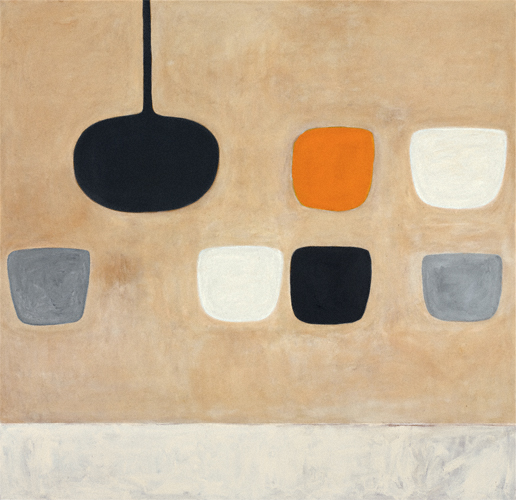
William Scott, 'Still Life With Orange Note', Oil on Canvas, 1680 mm x 1720 mm, 1970


Of course, nowadays, you can't move in Cornwall for tourist-facing galleries of all shapes and sizes, and many are stacked with mass-produced, sub-sub Herons, Lanyons, Nicholsons - and, indeed Scotts.  Such stuff also lines the walls of every other second home and holiday rental throughout the region.  And my own inspirations and enthusiasms long since turned away from both the landscape and the still-life table - towards something far more urban and potentially hard-edged.  But, just as one should avoid the tendency to pigeonhole or write-off an artist for superficial reasons - one should also resist denying one's own back story.  We all get wherever we're going by a variety of circuitous routes, after all.  Above all, I should always remember to keep looking at stuff afresh, and to never deny myself the pleasure of re-engaging, on its own terms, with work I'd half-forgotten.  Mostly, I'm just glad to have remembered that some of those Scott's really are very good.  Who knows? - they might even get some of our students to think a bit more clearly about shape and composition, one day.

      
William Scott, 'Permutation 4 - Ochre', Oil on Canvas, 1676 mm x 1726 mm, 1978